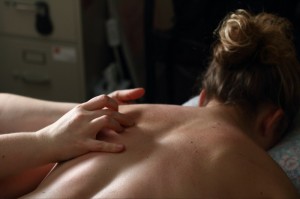
What Types?
Stiffness, soreness, pain, strains and pulls, performance, maintenance, cancer self-care, general wellness, nerve entrapments, whiplash, overuse or acute injuries (car accidents, falls), carpal tunnel, myofascial pain, scoliosis.
What is preventing you from getting a massage?
Deep Tissue
Deep Tissue focuses on the deeper layers of muscle tissue either following fiber direction or going across the fiber orientation of the musculature. Deep tissue is used to ‘strip’ or cleanse areas of chronic muscle tension by moving trapped metabolic waste build-up and other toxins within the muscle back into the blood for removal while restructuring the fiber alignment. It can be painful but if done correctly you will feel immediate relief.
Craniosacral Fascia Therapy (CSFT)
Nina trained with Dr. Barry Gillespie in 2007 – Craniosacral and Fascial Therapies to Heal Children and Adults. She has also received advanced training in myofascial work with Lou Benson and Howard Rontal. Our bodies have an interconnected 3D web of connective tissue that runs superficial to deep and head and toe. This specialized connective tissue is avascular (no blood therefore heals more slowly) and very strong (can exert >2000 lbs/in2). When traumatized, fascia can constrict and exert more pounds per square inch to become stronger than steel. Considering every muscle group down to each muscle fiber within each group is encased by this special tissue, if the fascia is tight, no amount of muscle therapy will help alleviate the root issue. It’s as if a tight sock is compressing the muscle or organ or bone even and until that sock is melted, loosened and made more fluid no complete unwinding or pain alleviation can occur.
“Fascia” refers to the connective tissues that support and surround the organs, muscles and bones. Myofascial bodywork encompasses a range of manual therapies. CSFT includes techniques which affect the fascial membranes of the central nervous system and the body’s cerebrospinal fluid balance. Sometimes CSFT and muscle work both need to be done to get relief. The intent is to listen with the hands and follow the body to unwind fascial strains while applying hands-on therapy to enhance the functioning of the craniosacral system. A release is never forced – listening hands go where the body wants to release and facilitates with manipulative therapy.
If a child is the client, the parent accompanies their child for each session.
Trigger Point Therapy
Static Pressure is applied to trigger points (TP), painful areas in muscles that refer pain to other areas of the body with or without direct point pressure, to relieve/eliminate spasm and pain. It can also be used on tender points (tp), painful areas that do not yet refer pain and are only painful when palpated, to prevent the area from worsening to a chronic TP.
Sports Massage — it’s not just for athletes
Sports massage isn’t just for athletes. A person can sprain an ankle by playing a competitive game of soccer or by stepping the wrong way off of a curb. The injury, the response of the body and the initial treatment are the same. This type of massage uses a variety of techniques including classic Swedish strokes, stretching, jostling, cross-fiber friction, compressions, traction and joint mobilization. It can be used for pre-event, inter-event and post-event – each event dictating the goals of the massage. For example, used pre-event the goals would be to energize the person, increase muscle and joint flexibility and warm up the body. Use post-event, we want to increase recovery (mind and body) by decreasing muscle tension, preventing delayed onset muscle soreness and helping to prevent any injuries from worsening.
Introductory Lymphatic Massage – Informed Massage for special populations
The lymphatic and fascial systems in the body are closely tied together. Nina is not a certified Manual Lymph Drainage Specialist. She has received introductory lymphatic drainage technique training to enhance lymph flow with Paula Bergs of the NMT Center in Florida (2009). This means she can assist your regular Manual Lymphatic Drainage Specialist (MLD) by supporting your treatments with gentle, informed therapeutic touch within the context of a massage to meet your special needs.
Lymphatic massage is gentle and light (1-2 on a pressure scale of 5 being extremely deep) and can assist the flow of the lymph throughout the body. It can be used as a treatment for many pathologies including post surgical swelling, post traumatic edema (e.g., sports injuries), migraine headaches and chronic pain syndromes. It can be very relaxing and this informed lymphatic work is intended to gently help reroute lymph flow around blocked nodes or enhance flow where nodes have been removed into healthy lymph vessels, which drain into the venous circulation. Nina is not trained to do wrapping or compression therapy or work with clients who have severe lymphedema and swelling.
Pregnancy Massage – for 2nd trimester onward
As pregnancy progresses, your body adjusts to additional strain on your back and legs and increases stress on weight-bearing joints. Massage can aid flexibility and relieve aches and pains, leg cramps and muscle spasms. The effects of relaxation and decreased tension positively impact the physical state of muscles and joints and assist in balancing emotions. The body of research on massage and pregnancy is small but growing. It suggests a reduction in anxiety, stress, insomnia, back pain, decrease in complications in delivery. In some research, newborns had fewer postnatal complications and moms had shorter labor and shorter hospital stays and less postpartum depression. Emotionally, massage can be a gentle and nurturing way for women to take care of themselves when they’re pregnant. Many pregnant women don’t necessarily get as much physical touching as they would like. It’s very therapeutic to have a competent and informed massage therapist take time to make sure you are bolstered and comfortable and simply take care of you and be present with you.
Oncology Massage – Caring for clients with cancer and cancer histories
Nina has received advanced training in oncology massage with Tracy Walton in Watertown, MA (2011). She has a working knowledge of cancer, its effects on the body and how current medical treatments can affect you. With this knowledge, she can tailor the massage to safely mitigate symptoms, improve mood and restore energy. Safe, comfort-oriented massage therapy to ease pain and discomfort both emotionally and physically. She is currently completing her case studies to become a Professional member of the Society for Oncology Massage.
For FAQ’s about massage and cancer, please see visit the Society for Oncology Massage website’s page http://www.s4om.org/div0/consumer_faq.htm
*Field, T., Ironson. (1996). Massage therapy reduces anxiety and enhances EEG pattern of alertness and math computations. International Journal of Neuroscience, 86, 197-205.